Discover Your Family History Through DNA & Genealogy Research
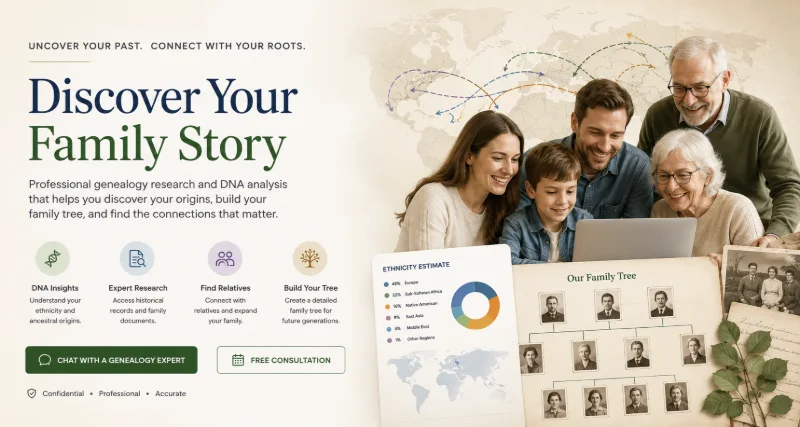
An ancestry DNA test can reveal valuable clues about your ethnic origins, migration patterns, and biological relatives. However, DNA results alone rarely tell the complete story. Professional genealogy research helps connect those genetic clues to historical records, family documents, and verified family tree connections.At Ancestryin, we help individuals and families transform DNA matches into meaningful family history discoveries. Whether you're trying to identify ancestors, locate relatives, understand your heritage, or build a documented family tree, our experienced researchers can guide the process.
Start Your Family History Journey
What Can an Ancestry DNA Test Reveal?
An ancestry DNA test provides genetic insights that can help answer important questions about your family background. While results vary by individual, DNA testing can serve as a valuable starting point for deeper genealogical research.
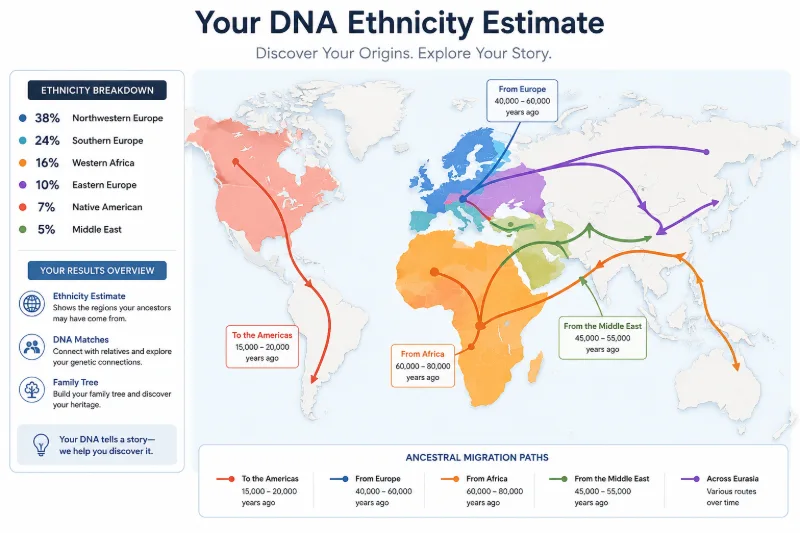
Discover Your Ethnic Origins
Many people take a DNA ethnicity test to learn where their ancestors came from. DNA testing can estimate connections to different geographic regions and populations.
You may discover:
Common Challenge
Many users receive ethnicity results but struggle to understand what the percentages actually mean. Professional interpretation helps place those results within historical and genealogical context.
Key Takeaways
Expert Insight
Treat ethnicity reports as clues, not conclusions. The strongest family history discoveries happen when DNA evidence is paired with documented records.
Find Unknown Relatives
DNA testing can help identify biological relatives and expand family connections.
Potential discoveries include:
For adoptees or individuals researching family mysteries, DNA can provide important leads that traditional records may not reveal.
Build Your Family Tree
A family tree DNA test is most valuable when combined with historical research.
-> Genealogists use:
-> Census records
-> Birth records
-> Marriage records
-> Death certificates
-> Immigration documents
-> Military records
These sources help verify relationships and build a documented family tree.
💬 Need help understanding your DNA results? Chat with a genealogy specialist today.
Why Families Choose Ancestry Research Services
While DNA testing provides clues, genealogy research provides answers. Our research process combines DNA evidence with historical documentation to create a clearer picture of your family's story.
Ethnicity & Heritage Discovery
Whether you're exploring your heritage through a dna heritage test, dna origin test, or ethnic background DNA test, our researchers help explain the historical significance behind your results.
Benefits:
Understand ancestral origins
Explore migration patterns
Identify regional heritage connections
Gain historical context
Common Challenge
Many individuals receive DNA reports but don't know how those results relate to their documented family history.
Family Tree Research
Our genealogy specialists help transform DNA findings into verified family connections.
Benefits:
Identify ancestors across generations
Extend existing family trees
Validate family stories
Discover new family branches
Expert Insight
A DNA match alone doesn't prove a relationship. Professional genealogy research helps confirm connections using historical evidence.
Relative Matching
Many clients come to us after receiving DNA matches they cannot identify.
We help:
Analyze DNA relationships
Identify common ancestors
Connect distant cousins
Expand family networks
Key Takeaways
DNA matches require interpretation
Historical records help verify relationships
Professional guidance saves time and frustration
Sample DNA Ancestry Results
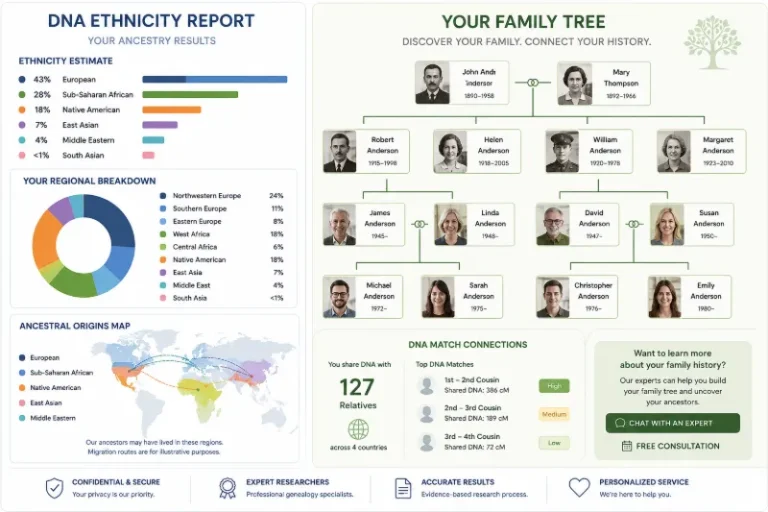
DNA results can provide valuable clues about your family's origins and relationships.
Ethnicity Estimate Example
A typical ancestry report may include:
Regional ancestry percentages
Historical migration routes
Population group estimates
Heritage breakdowns
Family Match Results
DNA reports often show:
Relative matches
Shared DNA segments
Predicted relationships
Genetic communities
Family Tree Integration
The strongest genealogy research combines:
DNA evidence
Historical records
Family interviews
Documented timelines
Key Takeaways:
DNA results are a starting point
Records provide verification
Combining both creates stronger conclusions
African American Ancestry Research
Researching African American ancestry often requires specialized methods due to historical challenges and record gaps.
Trace African American Family History
Our researchers work with:
Census records
Freedmen's Bureau records
Historical archives
Community records
African Heritage Discovery
DNA testing can help identify:
West African origins
Regional heritage connections Migration histories
Ethnic group associations
DNA-Guided Family Research
By combining DNA with genealogy research, we help clients:
Build documented family trees
Verify ancestral connections
Identify historical family locations
Expert Insight
African American genealogy often requires a customized research strategy that combines DNA evidence with specialized historical sources.
Understanding DNA Test Costs
One of the most common questions is about ancestry DNA cost and whether testing is worth the investment.
What Affects DNA Testing Costs?
Pricing varies based on:
Type of DNA test
Ethnicity reports included
Relative matching features
Additional traits reports
Is DNA Testing Worth It?
For many families, DNA testing provides:
Heritage insights
Family discoveries
New relative connections
Research opportunities
Common Challenge
Many people purchase a test expecting complete answers but receive only partial information.
Expert Insight
The greatest value comes from combining DNA results with professional genealogy research.
💬 Before purchasing a DNA test, chat with our genealogy experts for guidance.
Our Ancestry Research Process
We follow a structured process designed to deliver accurate and reliable results.
Step 1: Free Family History Consultation
We discuss your goals, questions, and existing information.
Step 2: Review Existing Family Information
We evaluate family records, documents, and research already collected.
Step 3: Analyze DNA Results
If DNA results are available, we review and interpret them.
Step 4: Historical Records Research
We search relevant databases, archives, and record collections.
Step 5: Build Your Family Tree
Our researchers document findings and relationships.
Step 6: Deliver Research Report
You receive organized findings and recommendations for future research.
Ready to Discover Your Family Story?
Whether you're exploring your ethnic origins, searching for biological relatives, interpreting DNA results, or building a family tree, professional genealogy research can help uncover answers that DNA testing alone cannot provide.
Why Families Trust Ancestryin